Seniors with a lifetime to share
Your first home. Your working years. A friendship that changed things. Begin wherever you like, and tell as much or as little as you want.
I want to tell my storyA story only you can tell
Talk about your life, one memory at a time. We help turn your words into stories that still sound like you.
Start with one story, free. No writing or AI experience needed.
Continue my story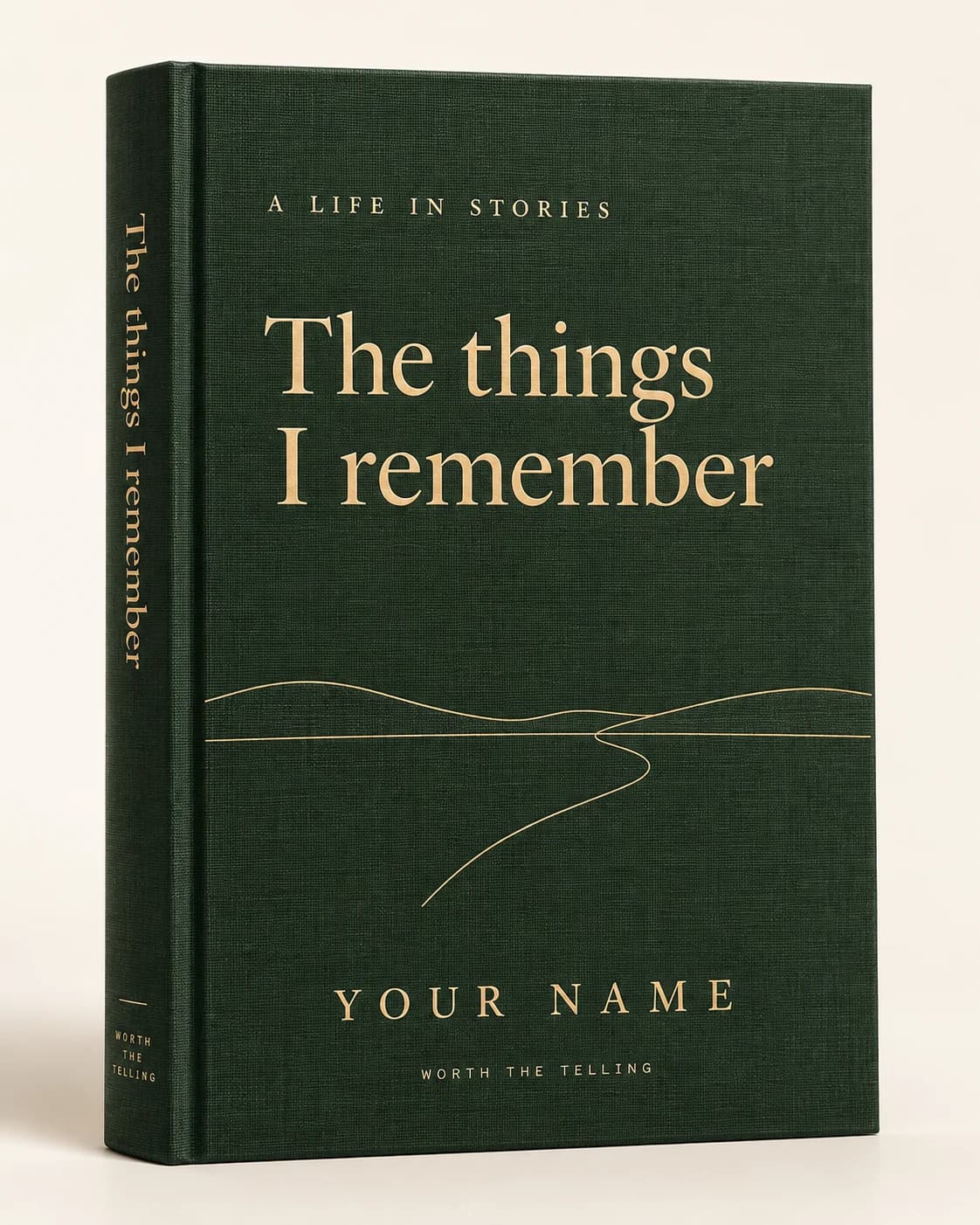
Your stories. Your name on the cover.
Illustrative cover design.
Explore the example digital bookYou don't need to have lived a famous life.
You just need to have lived your own.
Who it's for
You might be telling your own story, helping someone you love, or starting a project together.
Your first home. Your working years. A friendship that changed things. Begin wherever you like, and tell as much or as little as you want.
I want to tell my storyGive someone you love a gentle way to tell their stories. Help them get started, then make room for their words and the memories they choose to share.
I'm helping someone I loveA new country. A family business. A turning point. You don't have to write a whole life story to leave something meaningful.
Start with one memoryOne step at a time
No blank document to stare at. No AI prompts to learn. Just a place to begin.
Start with anything you remember. If you would like a starting question, choose Help me find a memory.
Use the words you normally use. Take a pause. Leave a thought unfinished. Your story doesn't need to come out perfectly.
Change any words yourself, say what you want changed, or choose a question to help you tell more. Keep a draft for later, or add the story to your book when you like it.
See a story take shape
Elias starts in the middle, forgets the year and jumps ahead. A few questions help him explain what happened with his dad, and why he kept a bent bolt.
Meet Elias, our fictional storyteller. Follow his rough telling, the questions he answers, and the story that takes shape.
Step 1 of 3
He presses Record your story and begins. He jumps around, doubles back, and wonders what an old bolt has to do with anything.
Well, Dad's gate. That's what I was going to tell you. The bottom hinge was never quite right after that. We were outside Hague, on the farm. I was sixteen, I think. Don't ask me the year because I couldn't tell you. He had this old grain truck. You had to pull on the door to get it shut. That's nothing to do with the gate, except it was that truck.
My brother could back it through there. I wanted to do it without somebody standing beside me telling me which way to turn. Dad was always there, you see. Checking. I thought he didn't believe I could do anything. Well, anything with a motor.
Anyway, I backed into the gatepost. Not fast. Just enough. The gate dropped and there was this awful scrape along the truck. I remember sitting there with the engine still running. Then I shut it off. I didn't get out straight away.
Funny what you keep. There's a bent bolt in a tobacco tin in my shed now. No tobacco in it. Washers, bits of string, that sort of thing. That bolt is from the gate. My daughter asked me why I kept a useless bolt. I couldn't explain it very well.
Dad came over from the shed. I thought, well, that's the end of me driving. We did get the gate hanging again. It wasn't quite straight. He didn't say much about it after. I still think about that afternoon more than some of the big things, if you know what I mean. I'm telling it all out of order.
When his draft appears, he chooses Ask me a question.
A fictional demonstration. Questions and story prepared by our AI from the supplied words. Listen uses a computer voice.
Something to keep
Start with a single story. Over time, gather the people, places and moments you want to remember into your own digital book.
Download your book as a PDF. Email it to family, share it with friends, or keep a copy for the generations ahead.
Want to reach more readers? Use your editable Word download to prepare an ebook for sale or a printed edition through services such as Amazon Kindle Direct Publishing.
See how to share or publish your bookThe right kind of help
Start with one story. Keep the whole book.
A ghostwriter usually costs thousands of dollars. Here you keep their own words and their own voice. All prices are in Canadian dollars, and the person managing the account handles payment.
Free
One story, with up to 30 minutes of recording. Try the questions, read the story back and keep the words.
Start freeNo card needed to start.
US $179 with a printed hardcover
Room for a whole book, at their own pace: up to 20 hours of talking. Aim for 40 to 80 pages for a book that feels complete. No monthly renewal. A 6 by 9 inch hardcover is posted to you when it is finished (colour printing $5 more). Digital only: $129.
Choose the bookKeep telling for US $19 a month. It adds up to 3 recording hours each month and stops adding at 12 unused hours. Any hours you already have stay yours. It renews monthly until canceled, and you can manage it in your account.
Choose monthlyEvery book includes PDF and editable Word downloads of the approved stories, and the original recordings. Keep a backup, share them, or print more copies. Any applicable tax is shown before payment.
Before you begin
No. There are no prompts to write. You hear or read a question, then talk in your own words. One question and one next step at a time.
Yes. Tell your own story, or invite someone you trust to help you get comfortable. You do not need to have a whole book planned.
You can leave a detail uncertain. A draft should ask for missing information or leave it unresolved, rather than guessing your history.
Your digital PDF book is ready to keep and share with the people you choose. You also get an editable Word file to prepare for selling as an ebook or ordering printed copies through a service such as Amazon KDP. Choose the format, cover and audience that suit your story. Our sharing guide takes you through the next steps.
Not yet as a complete solution. It is built for one family telling one person's stories. Community projects need their own decisions about language, permissions and long-term care first. Read about community projects.
Tap Log in in the green bar at the top of the page to return to your story or the family account you manage. Once you are logged in on a device, this website opens straight to your stories.
There is no perfect place to start.
One place. One person. One ordinary day that stayed with you.